Short answer
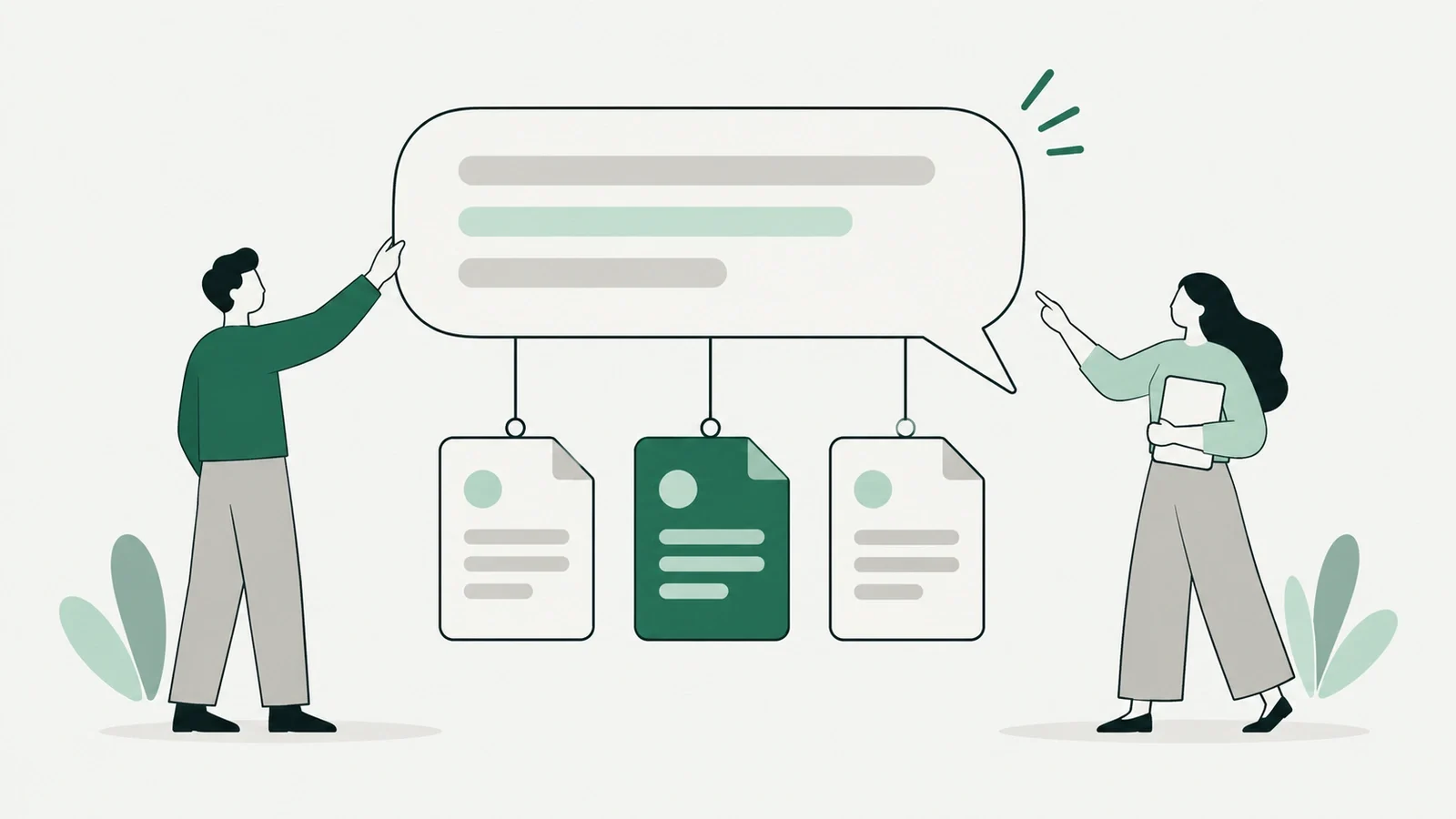
AEO, or answer engine optimization, is the practice of making your pages the ones that AI assistants and AI search features rely on and cite when they answer a question. Answer engines such as ChatGPT, Perplexity, Gemini and Google’s AI Overviews read pages, combine what they find and link to some of their sources. AEO is the work of becoming one of those sources: being crawlable, answering clearly, and being trustworthy enough to quote.
Key takeaways
- AEO is about being quoted and cited in AI-generated answers, not only about ranking in a list of links.
- Answer engines still depend on crawling and indexing. Google says there are no special requirements to appear in AI Overviews or AI Mode beyond being indexed and eligible to show a snippet.
- What helps most is ordinary quality made easy to quote: a direct answer, specific facts with sources, original data and clear structure.
- Google’s 2026 guidance lists llms.txt files, content chunking and AI-specific rewriting among the things you do not need.
- Measuring AEO means tracking citations and AI referrals as well as search clicks. On UpRank we track all of them as part of a public experiment.
What an answer engine is
A search engine returns a list of pages and lets you choose. An answer engine reads those pages for you and writes the answer, usually with a few links to the sources it used. ChatGPT search, Perplexity, Microsoft Copilot, Gemini, and Google’s AI Overviews and AI Mode all work this way.
HubSpot defines AEO as “the practice of structuring and presenting content so that answer engines” surface it in generated responses, and describes it as something that complements existing search strategies rather than replacing them. That is the right frame. AEO is not a new discipline that throws away search engine optimization. It is the part of the work that decides whether your page is quoted when the reader never sees a list of links.
The shift matters because readers behave differently when an answer is written for them. Pew Research Center tracked the browsing of 900 US adults in March 2025. When a Google search showed an AI summary, users clicked a traditional result on 8% of visits, against 15% when no summary appeared. They clicked a link inside the summary itself on just 1% of visits. Fewer clicks are available, and the pages cited in the answer are the ones in a position to get them.
How answer engines choose their sources
Every answer engine has its own system, and none publishes a ranking formula. What they have said in public is enough to understand the basics.
They crawl and index first. Google says a page must be “indexed and eligible to be shown in Google Search with a snippet” to appear as a supporting link in AI Overviews or AI Mode. OpenAI says sites that block its search crawler, OAI-SearchBot, “will not be shown in ChatGPT search answers.” Perplexity asks sites to allow PerplexityBot so they can appear in its results. An answer engine cannot quote a page it was not allowed to read.
They search more than once. Google explains that AI Overviews and AI Mode may use a “query fan-out” technique, “issuing multiple related searches across subtopics and data sources” to build a response. One question from a reader becomes several searches behind the scenes. A page can be cited for a question it was never written for, because it answered one of the related sub-questions well.
They cite beyond the top results. An Ahrefs analysis of about 4 million AI Overview URLs, published in March 2026, found that 37.9% of the pages cited in AI Overviews also appeared in the top ten results for the same query. Its earlier study, in July 2025, had put the figure at about 76%. Ranking still matters, but it no longer decides on its own which pages are quoted.
They lean on pages that look current and specific. In an Ahrefs study of the 1,000 pages ChatGPT cited most in September 2025, 89.7% of the pages with a detectable update date had been updated in 2025. The same study found that 28.3% of the cited pages had no organic keywords at all, which suggests that answer engines can find and use pages that traditional search barely shows.
What AEO looks like in practice
None of the answer engines asks for anything exotic. The practices that work are the ones that make a page easy to understand, easy to trust and easy to quote.
- Let the crawlers in. Check that robots.txt allows Googlebot, Bingbot, OAI-SearchBot and PerplexityBot. Blocking a training crawler such as GPTBot is a separate decision and does not remove you from ChatGPT search, according to OpenAI.
- Answer first. Put a short, complete answer at the top of the page, in two or three sentences that still make sense when quoted alone. The detail and the reasoning come after.
- Make one page answer one question fully. A page that covers a question and its natural follow-ups is more likely to match the sub-searches of a query fan-out.
- Use specific, sourced facts. A number with a named source and a date is easier to trust and easier to quote than a general claim.
- Publish something nobody else has. Original data, first-hand tests and measured results give an answer engine a reason to cite you instead of the ten pages that say the same thing.
- Keep a clear structure. Descriptive headings, short paragraphs, lists and tables help readers and machines find the part that answers their question.
- Say who you are. Pages that state who publishes them, what the site is and how it works give answer engines a clearer picture of the source.
- Keep it current. Update figures when they change and show the date. Freshness appears to count, especially for questions about prices and rules.
What you can skip
AEO has attracted its share of tricks. Google’s 2026 guide to optimizing for its generative AI features, as reported by Search Engine Journal, lists several tactics you do not need: llms.txt files, content chunking, rewriting content specifically for AI systems and special schema. Google’s documentation on AI features says the same about structured data: there is “no special schema.org structured data that you need to add.”
Structured data still has a role. It helps search engines understand what a page is, and Google asks that it match the visible text. It is not a shortcut into AI answers.
How to measure AEO
Measuring AEO is harder than measuring rankings, but it is possible:
- Search Console. Google counts traffic from AI Overviews and AI Mode within the normal Performance report. It does not separate it.
- Bing Webmaster Tools. In January 2026, Search Engine Land reported a limited beta of an AI Performance report that shows how often Copilot cites a site’s pages. It does not show clicks.
- Referral tracking. OpenAI says ChatGPT adds
utm_source=chatgpt.comto the links it sends, so visits from ChatGPT can be counted in any analytics tool. Referrals from other assistants show up as their own domains. - A fixed set of questions. The most direct test is to ask answer engines the questions your pages are meant to answer, on a regular schedule, and record whether you are cited.
How we apply AEO on UpRank
This blog is the test bed for the UpRank experiment, which asks whether useful content and AEO can bring the attention that hype once brought to a pay-to-rank board. Everything described above is applied here, and each step is logged on the experiment page with its date.
- Answer first. Every article opens with a short answer box. On Google Ads cost, for example, the first lines give the 2026 median cost per click and explain how Google spends a daily budget before any detail.
- Original data. Our UpRank data page publishes figures nobody else has: what listings on the board paid and the clicks they received, about $0.05 per recorded click across the board on October 12, 2026.
- Sourced and dated facts. Every article ends with its sources and the dates they were checked, and all of them are collected on our resources page.
- One question per page, grouped by topic. Each article answers one question, and six guides tie them together: promotion costs, directories, pay-to-rank boards, organic visibility, our data and the experiment itself.
- Crawler access. OAI-SearchBot and PerplexityBot are allowed in alongside Googlebot and Bingbot. The blog lives under the board’s domain, so the board’s robots.txt governs it; our guide to SEO for startups explains how robots.txt works and how we handle ours.
- No shortcuts. We do not publish an llms.txt file or rewrite pages for machines. If the experiment works, it will be because the pages answer questions well.
For how AEO relates to traditional search work, read AEO vs SEO and our guide to organic visibility. For the practical steps toward ChatGPT citations, read how to get cited by ChatGPT.
Frequently asked questions
What does AEO stand for?
Answer engine optimization: the practice of making your pages the sources that AI assistants and AI search features quote and cite when they answer questions.
Is AEO the same as SEO?
No, but they overlap heavily. Both depend on crawling, indexing and helpful content. AEO adds a focus on being quoted inside AI answers, and on measuring citations and AI referrals as well as clicks.
Do I need an llms.txt file for AEO?
Google’s 2026 guidance on generative AI features lists llms.txt among the things you do not need. We do not use one on UpRank.
Do I need special schema to appear in AI Overviews?
Google says there is no special schema.org structured data required to appear in AI Overviews or AI Mode. Structured data should match the visible page, but it is not a shortcut.
How long does AEO take to work?
Nobody publishes a timeline. Pages first have to be crawled and indexed, and OpenAI and Perplexity both say changes to robots.txt can take up to about 24 hours to reach their systems. We are logging our own timeline on the UpRank experiment page.
Sources
- HubSpot, AEO (Answer Engine Optimization), glossary, accessed October 12, 2026
- Google Search Central, AI features and your website, last updated December 10, 2025, accessed October 12, 2026
- Search Engine Journal, Matt G. Southern, Google’s llms.txt guidance depends on which product you ask, May 20, 2026, accessed October 12, 2026
- Ahrefs, Louise Linehan, study of how many AI Overview citations come from top 10 pages, March 2, 2026, accessed October 12, 2026
- Ahrefs, Louise Linehan, 67% of ChatGPT’s top 1,000 citations are off-limits to marketers, October 28, 2025, accessed October 12, 2026
- Pew Research Center, Google users are less likely to click on links when an AI summary appears in the results, July 22, 2025, accessed October 12, 2026
- OpenAI, Overview of OpenAI crawlers, accessed October 12, 2026
- OpenAI Help Center, Publishers and developers FAQ, accessed October 12, 2026
- Perplexity, Perplexity crawlers, accessed October 12, 2026
- Search Engine Land, Barry Schwartz, Bing Webmaster Tools testing new AI performance report, January 27, 2026, accessed October 12, 2026
The board
Put your product on UpRank
Your rank is your lifetime total, the cheapest spot is $1, and every listing shows the clicks it receives. Check what a spot costs today before you decide.